IGF-1 LR3: Long-Acting Recombinant Growth Factor Variant
IGF-1 LR3 Product Description
Advance your cellular proliferation and tissue growth protocols with the premium IGF-1 LR3 research peptide from Riptide Labs. Insulin-like Growth Factor 1 Long R3 represents a modified, synthetic analogue of human IGF-1 specifically engineered to overcome the half-life limitations of the native protein. Scientific researchers frequently select IGF-1 LR3 for experimental evaluations because its unique molecular structure provides extended bioactivity within biological systems. Riptide Labs subjects every production lot to comprehensive analytical testing, which guarantees exceptional chemical stability, precise molecular sequencing, and maximum purity for your research setting.
The IGF-1 LR3 analogue delivers notable biochemical advantages across multiple experimental applications. This compound acts as a powerful potent mediator of cell growth, differentiation, and survival across diverse tissue types. It actively upregulates amino acid transport and accelerates intracellular protein synthesis within skeletal muscle and connective tissue models. Consequently, researchers routinely deploy this protein to examine muscle hypertrophy, cellular hyperplasia, and nutrient partitioning mechanisms. Furthermore, the analogue exhibits strong anti-apoptotic properties, which help preserve cell viability under harsh or nutrient-deprived culture conditions. Sourcing your materials from Riptide Labs ensures that you receive a stable, standardized compound that yields reliable, reproducible outcome data.
Understanding the structural modifications helps researchers maximize the utility of IGF-1 LR3 in ongoing laboratory protocols. Native IGF-1 possesses a short half-life because it rapidly binds to endogenous IGF binding proteins that deactivate its biological function. In contrast, this engineered version incorporates an arginine substitution at position 3 alongside a 13-amino-acid N-terminal extension. These structural changes drastically reduce affinity for binding proteins while preserving full receptor binding capability. Because the molecule avoids premature binding inactivation, it remains active in culture for significantly longer periods. Consequently, target cells experience sustained receptor stimulation, driving downstream signaling cascades such as the Akt and MAPK pathways far more effectively than native forms.
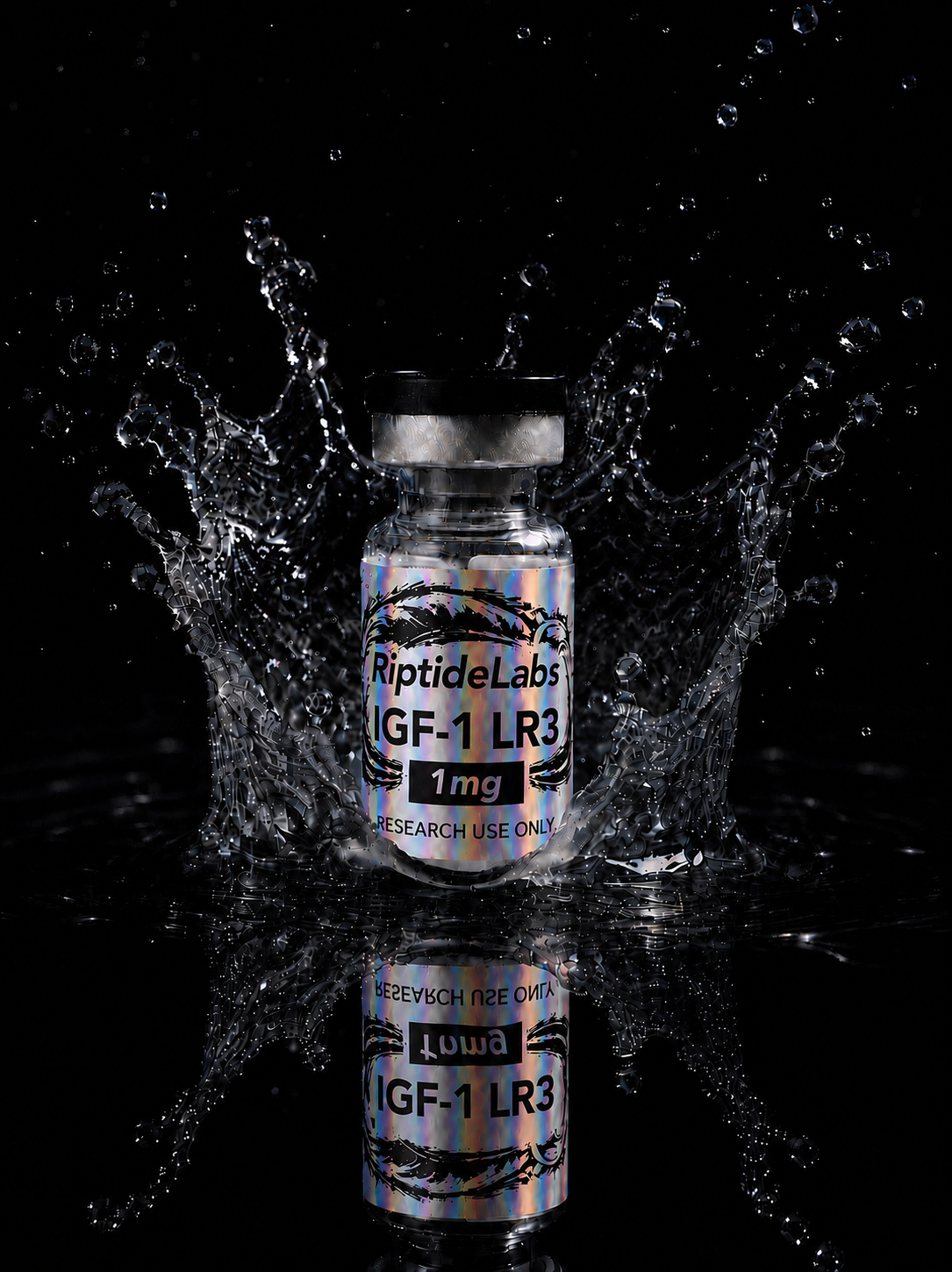
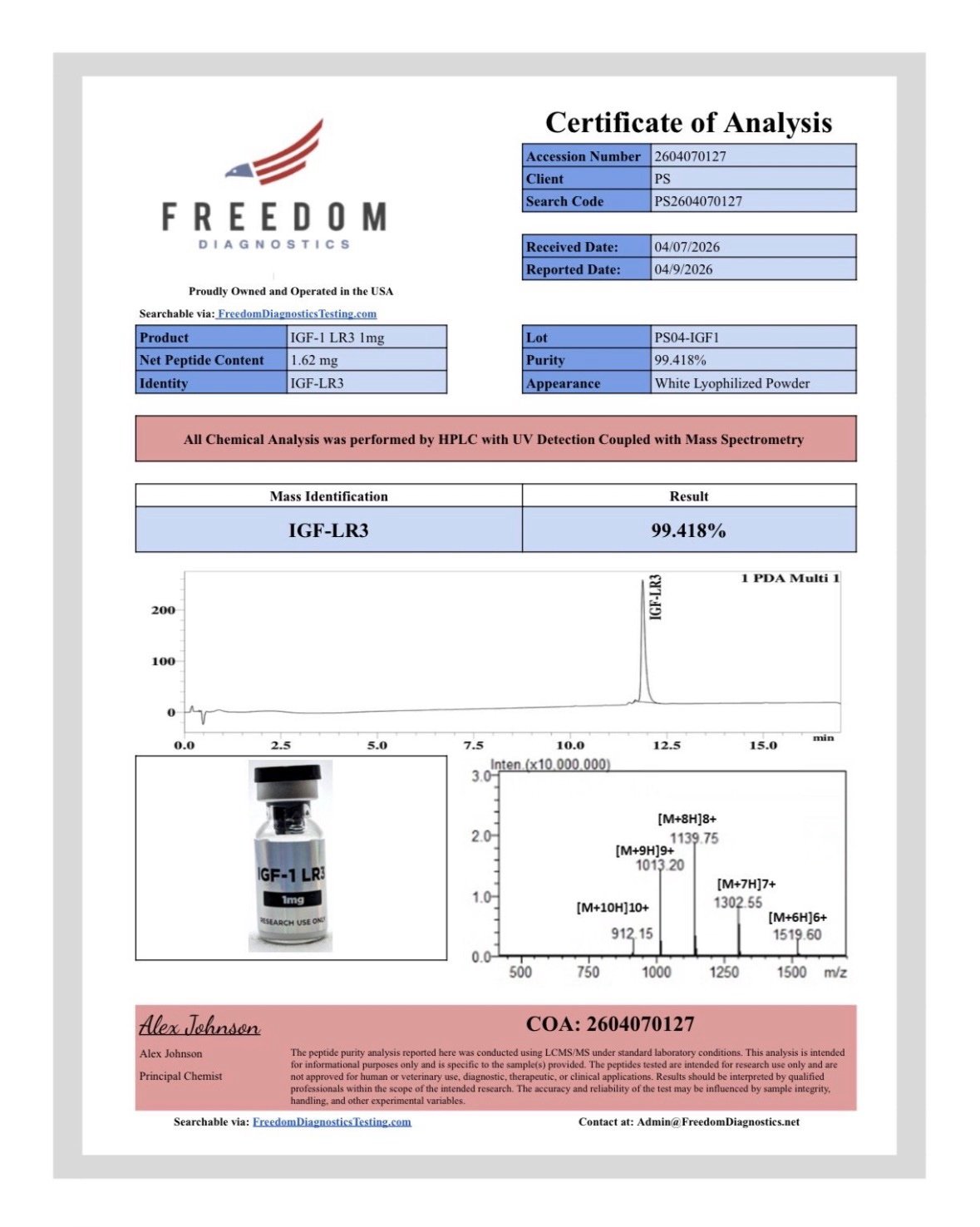
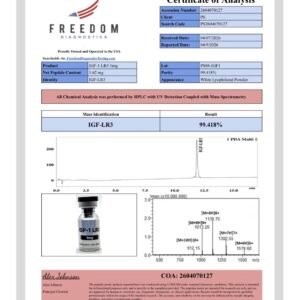
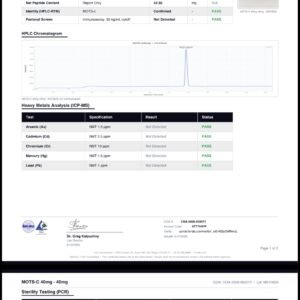
Riptide Labs manufactures every peptide batch under rigorous analytical standards to ensure top-tier scientific reliability. Each vial contains pure recombinant Insulin-like Growth Factor 1 Long R3 provided in a sterile, freeze-dried powder form. High-Performance Liquid Chromatography (HPLC) and Mass Spectrometry testing confirm a purity grade equal to or exceeding 98.0%. The physical material presents as a uniform white cake that reconstitutes easily in standard aqueous diluents, such as diluted acetic acid or Bacteriostatic Water. To preserve long-term bioactivity and prevent structural degradation, store un-reconstituted vials between 2°C and 8°C while keeping the container fully protected from direct light exposure.
Proper preparation techniques ensure that your IGF-1 LR3 material retains maximum potency throughout active testing cycles. Store dry vials in cold storage prior to reconstitution. When you are ready to prepare your working solution, introduce your chosen diluent slowly down the inner glass wall of the vial. Do not spray liquid directly onto the freeze-dried cake. Gently swirl the glass container using smooth circular movements until the solid mass dissolves completely into a clear fluid. Avoid shaking the vial vigorously, because aggressive physical agitation can shear fragile protein structures. Following reconstitution, refrigerate the fluid mixture and execute your planned evaluations within your designated experimental schedule.
This research compound from Riptide Labs is manufactured strictly for laboratory, scientific, and chemical testing purposes. It is explicitly not cleared or intended for human consumption, cosmetic application, animal administration, diagnostic procedures, or therapeutic use. Authorized research technicians must handle all materials in compliance with standard biosafety guidelines and appropriate personal protective equipment protocols.
4 reviews for IGF-1 LR3
Add a review
Related products
Peptides
Peptides
Peptides
Peptides
Peptides
Peptides
Peptides
Peptides
Nathan J –
Our research focuses on nutrient partitioning and protein synthesis under starved culture conditions. Riptide’s IGF-1 LR3 demonstrated remarkable anti-apoptotic effects, preserving cell viability across extended observation windows. The lyophilized cake was pristine, and cold-chain shipping ensured the temperature remained regulated during transit.
Marcus T –
Finding reliable recombinant growth factor analogues with consistent bioactivity can be challenging. Riptide Labs’ batch-to-batch consistency has been excellent across our last three orders. Minimal binding protein interference allows for far lower baseline dosing in our hypertrophy assays.
Marcus T –
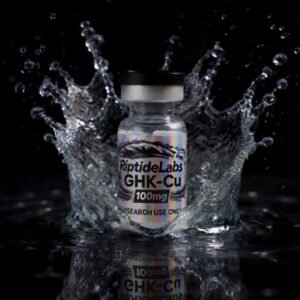
Overall exceptional reagent quality. Reconstitution with diluted acetic acid yielded a completely clear, stable working solution. Giving 4 stars only because the product tags on the store page briefly mention GHK-Cu, which caused a second of confusion during order routing, but the vial contents and documentation were 100% accurate for IGF-1 LR3.
Aliana . S –
The reduced affinity for IGFBPs allows us to maintain long-term receptor occupancy without needing constant media re-supplementation. The pre-measured lyophilized format makes laboratory assay prep efficient and accurate. Highly recommended for long-horizon cell differentiation studies.