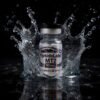
NAD+: Essential Cellular Coenzyme & Redox Regulator
NAD+ Product Description
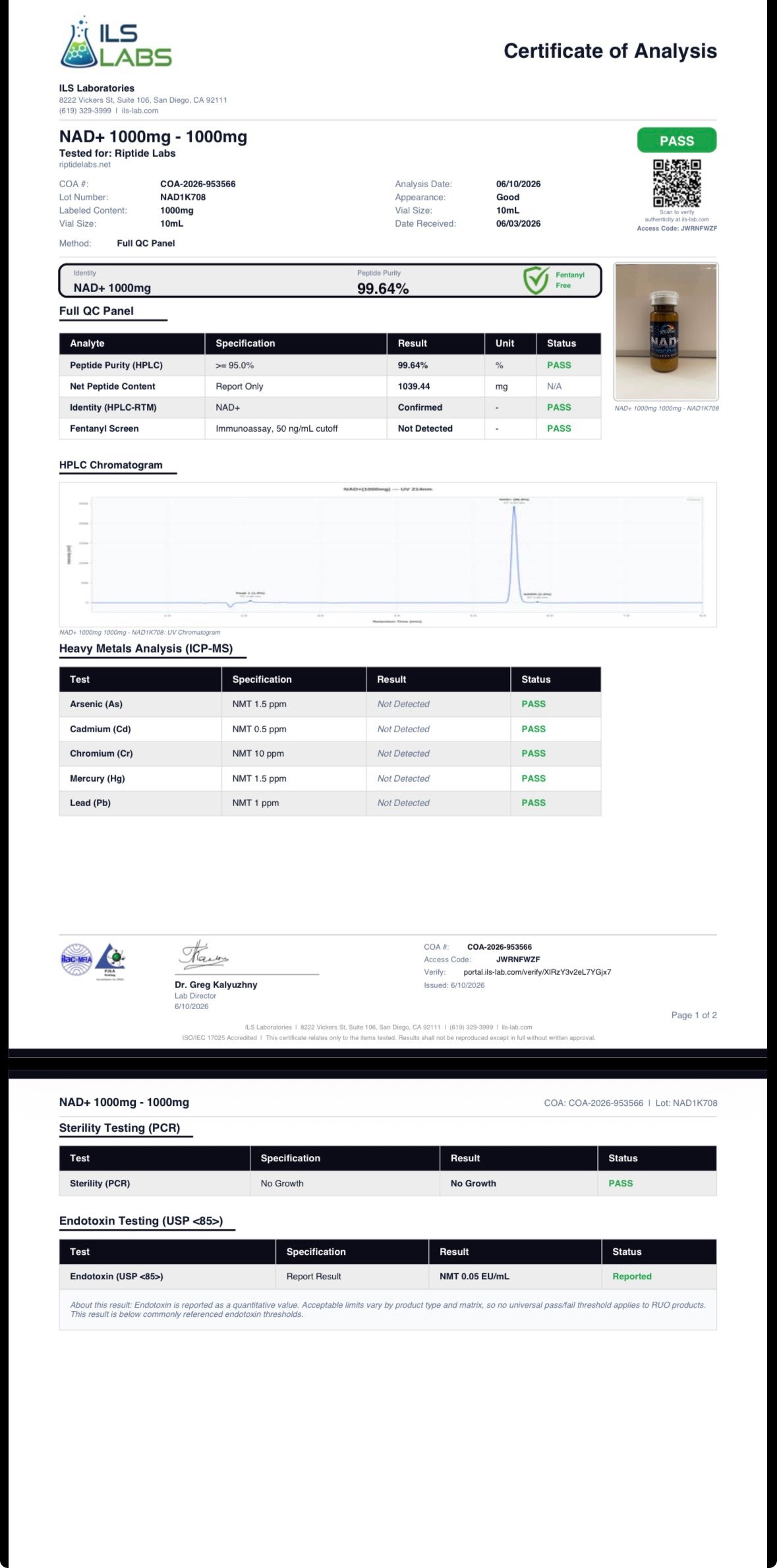
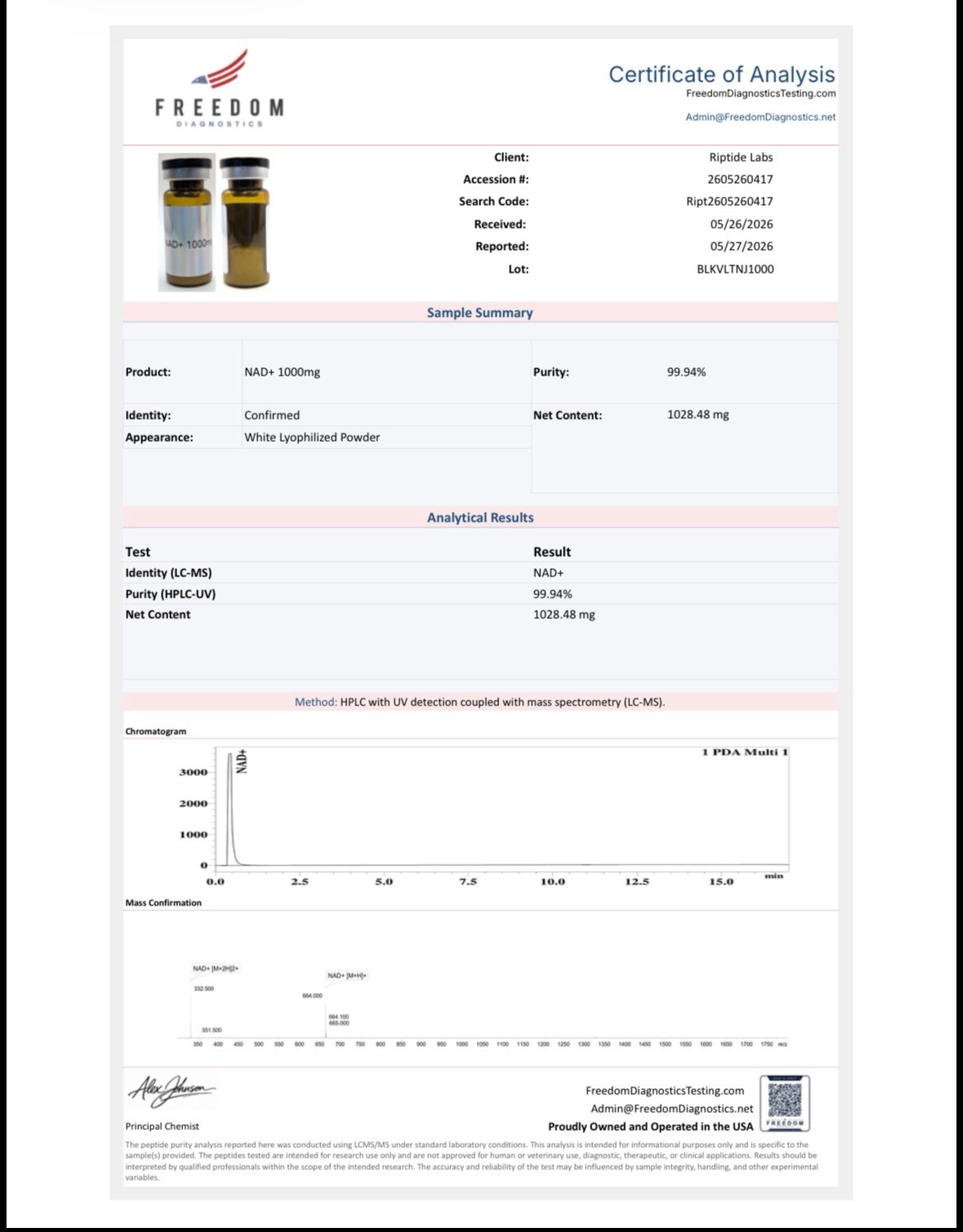
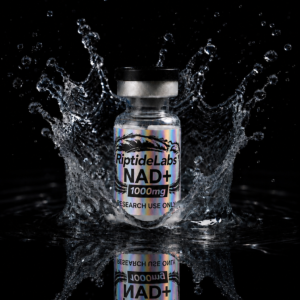
Advance your mitochondrial biology and cellular metabolism protocols with the premium NAD+ research compound from Riptide Labs. Nicotinamide Adenine Dinucleotide represents a fundamental coenzyme found in all living cells, acting as a critical metabolic cofactor for essential biological reactions. Scientific researchers frequently select NAD+ for specialized laboratory evaluations because it serves as an indispensable electron carrier in cellular respiration and a key substrate for enzymes governing genomic integrity. Riptide Labs subjects every production lot to comprehensive analytical testing, which guarantees exceptional chemical stability, precise coenzymatic potency, and maximum purity for your research setting.
The NAD+ coenzyme complex delivers remarkable biochemical versatility across diverse cellular models. This molecule acts directly as a primary oxidizing agent in glycolysis, beta-oxidation, and the citric acid cycle, accepting electrons to form its reduced counterpart. Beyond its central role in ATP generation, it functions as a crucial rate-limiting substrate for sirtuins, poly(ADP-ribose) polymerases, and cyclic ADP-ribose synthases. Consequently, researchers routinely deploy this compound to examine mitochondrial biogenesis, nuclear-mitochondrial communication, and cellular longevity pathways. Furthermore, maintaining optimal coenzyme concentrations supports cellular resistance to metabolic stress and environmental damage. Sourcing your materials from Riptide Labs ensures that you receive a standardized compound that yields reliable, reproducible outcome data.
Understanding the enzymatic consumption pathways helps researchers maximize the utility of NAD+ in ongoing laboratory protocols. Intracellular pools naturally decline with cellular age and under chronic oxidative stress, altering metabolic flux and signaling activity. Because sirtuins rely on available coenzyme levels to deacetylate target proteins, fluctuations in pool size directly impact chromatin remodeling and gene transcription. Once consumed by repair enzymes during DNA damage response, the molecule must be replenished through salvage pathways to maintain metabolic equilibrium. Consequently, research models demonstrate clear metabolic adjustments, allowing detailed mapping of energy-sensing networks and nuclear repair kinetics.
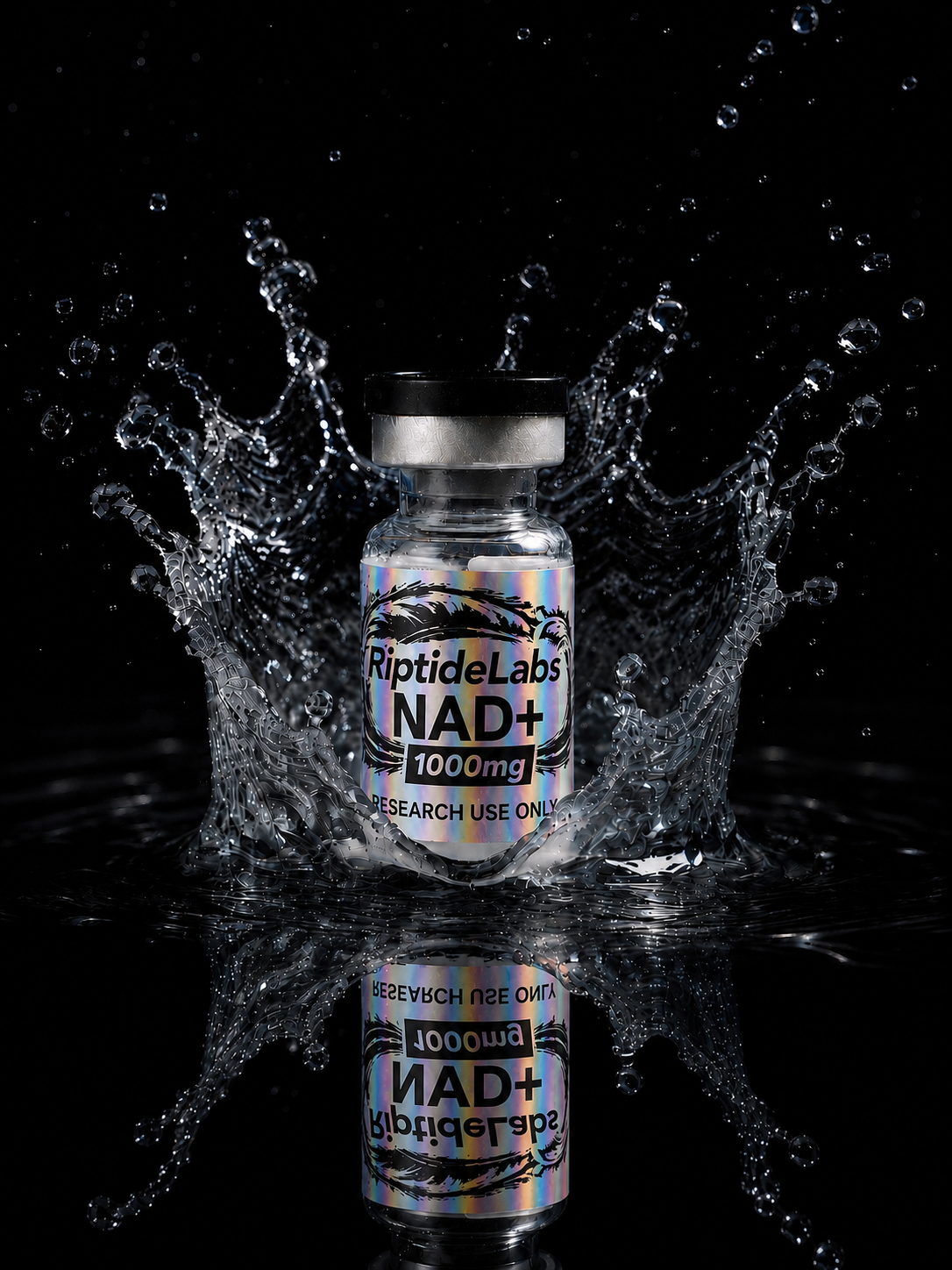
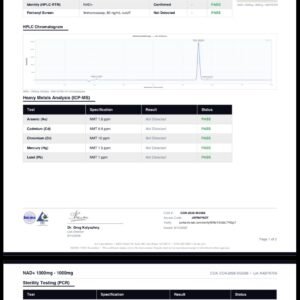
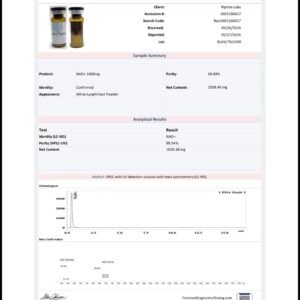
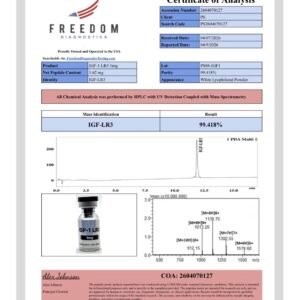
Riptide Labs manufactures every production batch under rigorous analytical standards to ensure top-tier scientific reliability. Each vial contains pure high-potency coenzyme material provided in a sterile, freeze-dried powder form. High-Performance Liquid Chromatography (HPLC) and Mass Spectrometry testing confirm a purity grade equal to or exceeding 98.0%. The physical material presents as a uniform white cake that reconstitutes easily in standard aqueous diluents, such as Sterile Water for Injection or Buffered Saline. To preserve long-term bioactivity and prevent moisture-induced degradation, store un-reconstituted vials between 2°C and 8°C while keeping the container fully protected from direct light exposure.
Proper preparation techniques ensure that your NAD+ material retains maximum potency throughout active testing cycles. Store dry vials in cold storage prior to reconstitution. When you are ready to prepare your working solution, introduce your chosen diluent slowly down the inner glass wall of the vial. Do not spray liquid directly onto the freeze-dried cake. Gently swirl the glass container using smooth circular movements until the solid mass dissolves completely into a clear fluid. Avoid shaking the vial vigorously, because aggressive physical agitation can introduce air and destabilize fragile chemical bonds. Following reconstitution, refrigerate the fluid mixture and execute your planned evaluations within your designated experimental schedule.
This research compound from Riptide Labs is manufactured strictly for laboratory, scientific, and chemical testing purposes. It is explicitly not cleared or intended for human consumption, cosmetic application, animal administration, diagnostic procedures, or therapeutic use. Authorized research technicians must handle all materials in compliance with standard biosafety guidelines and appropriate personal protective equipment protocols.
| Quantity | 500mg, 1000mg |
|---|
3 reviews for NAD+
Add a review
Related products
Peptides
Peptides
Peptides
Peptides
Peptides
Peptides
Peptides
Peptides
Alan D –
The chemical purity on this NAD+ batch is solid—we ran an internal HPLC check upon arrival and confirmed it comfortably clears the 98% threshold. Reconstitution with sterile water was smooth, and it worked well in our sirtuin-deacetylation assays. The only drawback is that the freeze-dried cake was slightly fragmented during transit, though it dissolved cleanly with gentle swirling without impacting bioactivity.”
Claire H –
We ordered both the 500mg and 1000mg vials for our cellular respiration models. The coenzyme performs consistently in driving redox reactions, and the pricing per milligram is fairly competitive compared to larger suppliers. Shipping took an extra few days to clear regional logistics, but the cold-chain packaging preserved the product integrity completely.
Steven P –
Decent reagent for PARP activity and nuclear repair assays. The material is very sensitive to light and temperature once reconstituted, so you have to be meticulous with handling and quick to execute protocols. It delivers reliable baseline data, though I’d prefer clearer batch-specific expiration timestamps on the vial labels.