
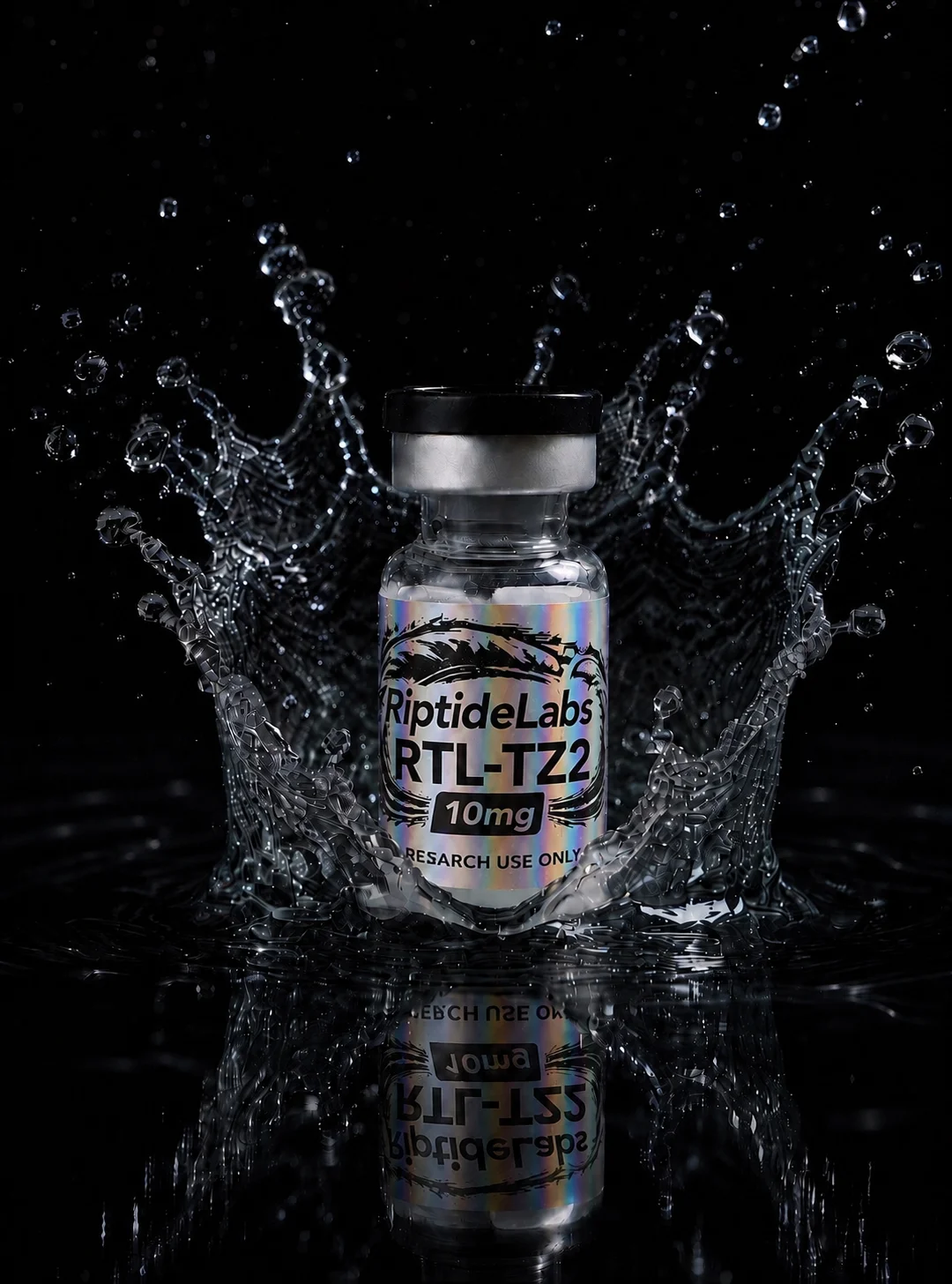

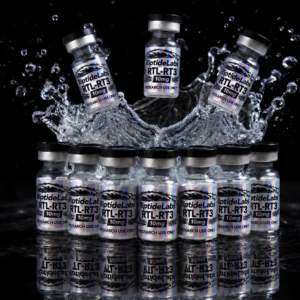
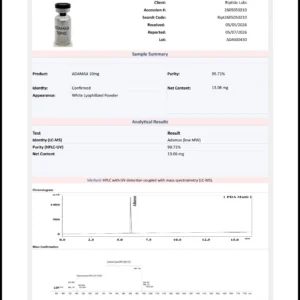
RTL-TZ2 10mg (Tested at 14mg)
RTL-TZ2 represents a highly anticipated leap forward in the study of metabolic pathways, dual-receptor agonist signaling, and accelerated tissue homeostasis. This complex synthetic chain belongs to a modern class of multi-receptor ligands engineered to interact with the body’s natural endocrine feedback systems. While the labeling sets a baseline concentration of 10mg, high-performance liquid chromatography testing reveals an actual verified payload of 14mg per vial. This substantial overfill ensures that advanced research facilities receive a highly potent, nutrient-dense compound that maximizes cell receptor saturation during delicate in vitro and in vivo tracking assays.
This specific 10mg configuration (tested at 14mg) provides a significant analytical advantage for busy laboratory environments. Instead of working with minimal quantities that might fall short under aggressive testing schedules, researchers gain an extra four milligrams of pure active material. This bonus volume allows for extended observation windows and the formulation of precise, high-concentration liquid gradients. The lyophilized crystalline structure guarantees that the entire 14mg payload remains perfectly intact. Consequently, this product serves as a vital tool for cutting-edge institutions focusing on metabolic flexibility, tissue repair, and longevity networks.
Understanding Dual-Agonist Signaling and Energy Shifts
To accurately track the data generated by this modern ligand, it is helpful to review the core definition of what is peptides and how their advanced counterparts navigate cellular communication networks. Peptides are short links of amino acids that act as targeted structural messengers, binding to surface-level receptors to guide vital biological events. While traditional early-generation peptides only possess the keys to a single cellular lock, modern advanced ligands are engineered with a multi-receptor design. This allows them to engage distinct biochemical pathways at the exact same time.
Specifically, this compound acts as a synchronized dual agonist, binding to multiple hormone receptors that manage glucose regulation and lipid metabolism. Once introduced into a laboratory model, the molecule triggers the release of insulin when blood sugar levels spike, while simultaneously suppressing excess glucagon production. This dual-action pathway forces the cell matrix to shift its energy priorities away from glycogen storage and redirect them toward active fat oxidation. By utilizing a vial tested at 14mg, researchers can achieve complete receptor saturation, allowing them to collect clean tracking data on how cells maintain energy balance under high-stress conditions.
Be the first to review “RTL-TZ2 10mg – *TESTED AT 14mg*”
Related products

Uncategorized
Uncategorized
Uncategorized

Uncategorized
Uncategorized
Uncategorized
Uncategorized

Uncategorized
Reviews
There are no reviews yet.